
Fintly Theme
Summary
As digital lending transformation accelerates, financial institutions must modernize how they manage credit risk. Traditional, fragmented systems cannot keep pace with today’s compliance requirements and customer expectations. Unified lending infrastructure, powered by AI-driven decision intelligence, business rules automation, and early warning systems, is transforming how lenders assess, monitor, and mitigate financial risk.
This blog explores the challenges of legacy systems, the rise of AI-powered decision automation, and why a connected approach represents the future of intelligent risk management.
Introduction: The Lending Landscape is Changing
The lending industry is undergoing rapid transformation. With growing digital adoption, rising borrower expectations, and stricter compliance demands, institutions must make faster, data-driven credit decisions without compromising accuracy. However, many lenders still depend on disconnected systems for credit scoring, underwriting, and collections, leading to data silos and inefficiencies.
That’s where Unified Financial Intelligence comes in, enabling end-to-end financial risk management through an intelligent ecosystem that integrates AI decision-making software, business rule management systems, and AI-powered credit scoring models to streamline decision logic and ensure compliance.
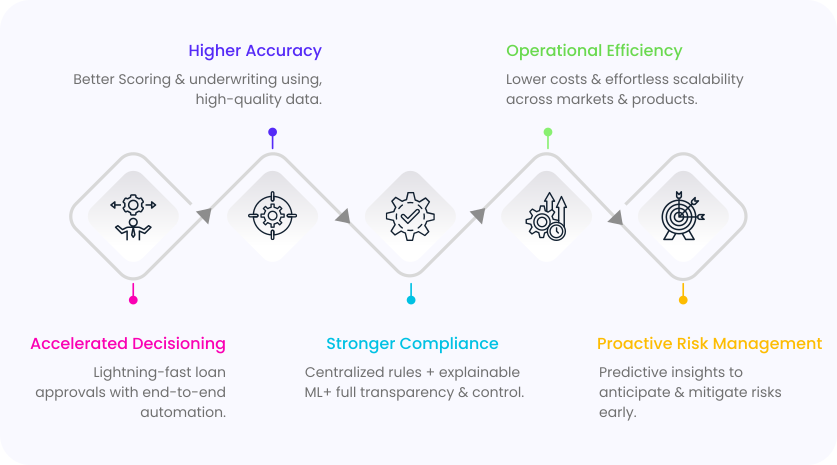
The Real Advantage of Unified Lending
Unified lending platforms remove manual gaps and data silos. Lenders get instant income insights, automated decisions, and proactive risk alerts, resulting in higher approval accuracy and better portfolio performance.
Challenges with Fragmented Risk Systems
Siloed lending tools slow teams down and blur the full risk picture. When data sits in different systems and manual checks drive underwriting, decisions take longer and accuracy suffers. Risk signals often surface late, making interventions reactive instead of strategic.
Key pain points include:
- Scattered data sources: Human data entry increases errors and slows underwriting.
- Manual-heavy workflows: Human data entry increases errors and slows underwriting.
- Unaligned credit policies: Without centralized rules, decisions vary, and compliance weakens.
- Delayed risk visibility: Risk indicators surface only after repayment stress begins.
In a fast-moving digital lending environment, fragmentation increases operational risk and slows growth.
How Unified Lending Infrastructure Transforms Risk Management
Unified infrastructure reshapes credit operations by combining automation, analytics, and transparency:
- Automated Financial Analysis: AI bank statement analyzers extract and classify data instantly.
- Dynamic Rule Engines: No-code decision automation enables instant policy updates for compliance.
- Explainable ML Scoring Models: Every lending decision remains transparent and auditable.
- Real-Time Early Warning Systems: Predictive analytics help detect potential defaults early.
Did you know?
Lenders using unified decisioning platforms report up to 70% faster approval cycles and 40% fewer manual errors in underwriting.
Key Benefits for Modern Lenders
- Accelerated Decisioning : Faster loan approvals through end-to-end automation.
- Superior Accuracy : Comprehensive data improves credit scoring and underwriting quality.
- Enhanced Compliance : Centralized, auditable logic ensures consistent governance.
- Operational Efficiency : Lower costs and scalable processes across markets.
- Proactive Risk Management : Predictive insights enable early intervention.
Beyond imagination
Unified lending infrastructure strengthens decision intelligence by blending AI, dynamic credit rules, and live financial insights. Lenders move from manual checks to faster, accurate, and compliant lending at scale.
Future Outlook: Financial Risk Management 2.0
The next era of risk management is connected, predictive, and self-learning. With open banking integrations, explainable AI, and embedded analytics, lenders are shifting from reactive to anticipatory risk management.
This evolution marks the rise of enterprise risk intelligence; where automation, transparency, and human oversight work together to build resilience and trust.